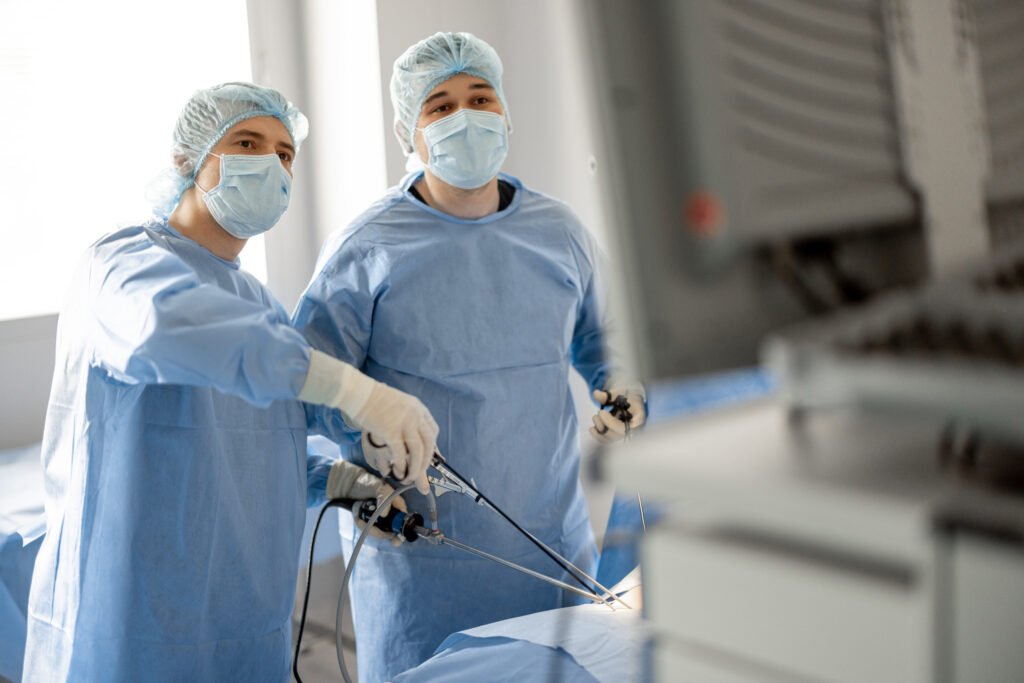
Minimally invasive and endoscopic procedures are modern techniques where treatment is performed using smaller access routes and specialized instruments/cameras. This can help manage selected brain, spine, and surgical conditions with a precision-focused approach.
Why patients prefer it
✅ Smaller incisions (in suitable cases)
✅ Less tissue handling
✅ Reduced post-procedure discomfort
✅ Faster recovery planning
✅ Shorter hospital stay may be possible (case-dependent)
✅ Better cosmetic outcome (smaller scar)
When it may be recommended
Your doctor may consider minimally invasive/endoscopic options for selected cases, based on reports and clinical evaluation—especially when a condition can be safely managed without large open surgery.
How the process works
Step 1: Consultation & Report Review
Symptoms + MRI/CT/X-ray + detailed evaluation
Step 2: Suitability Check
We confirm whether minimally invasive/endoscopic treatment is safe for your case.
Step 3: Procedure Planning
Clear explanation of steps, precautions, and expected recovery.
Step 4: Follow-Up & Recovery Support
Post-procedure monitoring, guidance, and long-term support.
Important note (must add on page)
Minimally invasive/endoscopic procedures are not for every patient. They are recommended only when medically appropriate after evaluation by the specialist.